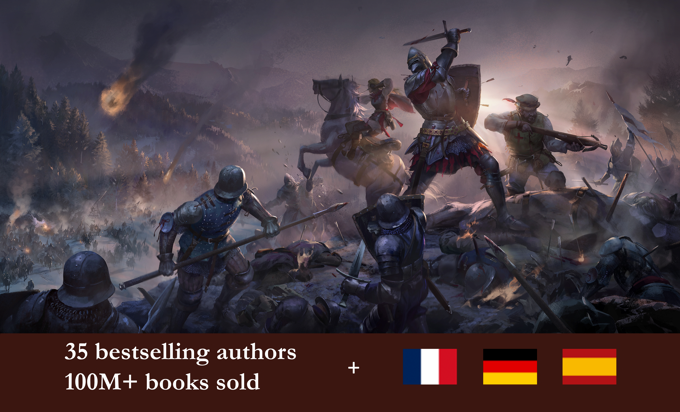
35 authors. 100M+ books. Four languages. The biggest names in historical fiction. One shared world. History in the making.

Famine, plague, hardship, misery, chaos, blood, death, war! In our A Century of Swords Anthology (Anthology hereafter) we have gathered six of the leading voices in historical fiction.
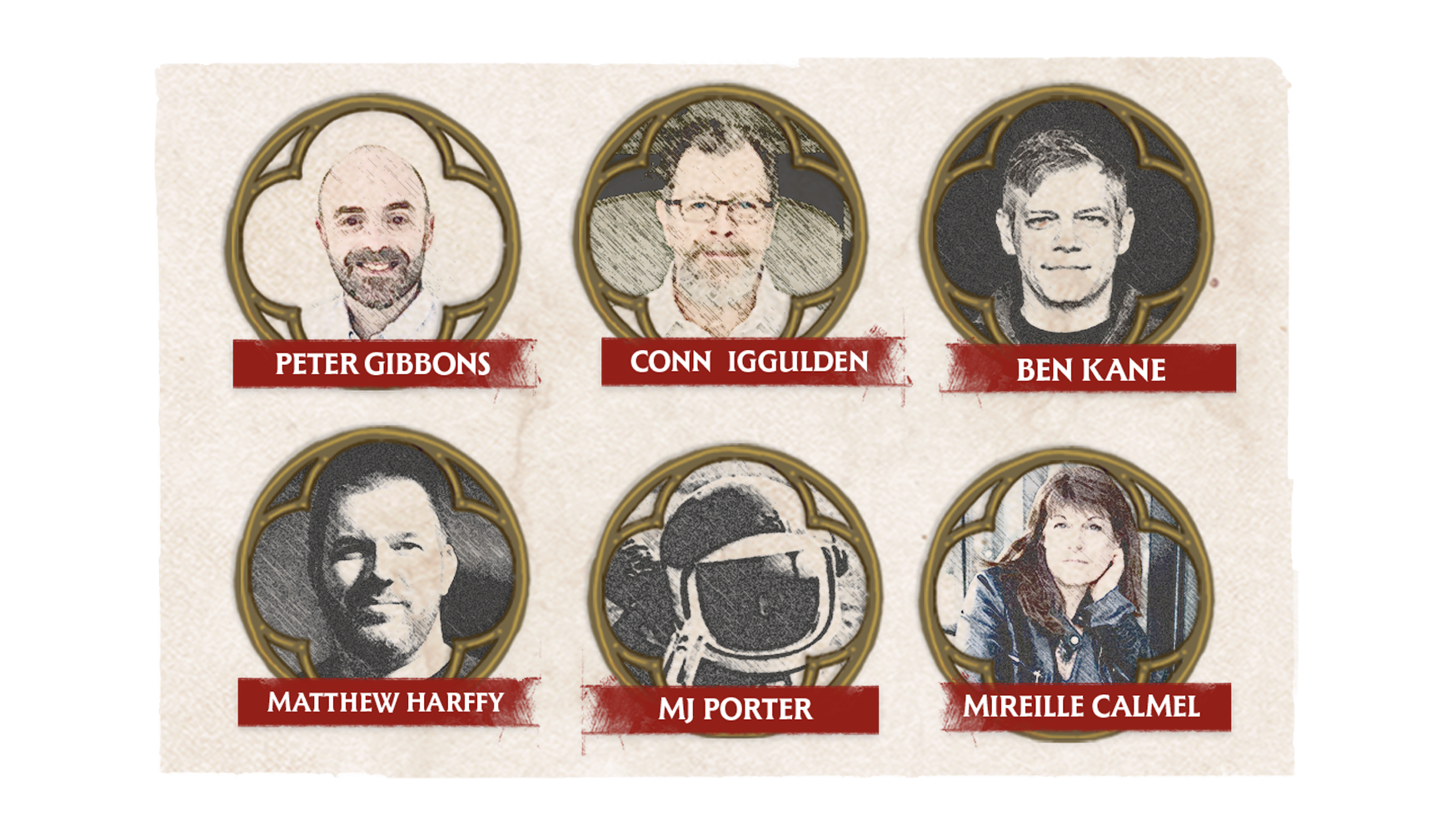
Conn Iggulden (10M+ readers), Ben Kane (2M+ readers), Matthew Harffy, MJ Porter, Peter Gibbons and Mireille Calmel (18M+ readers) each contribute a brand new story set in the shared world of The 14th Century. An additional 29 bestselling writers join as stretch goals unlock and combined they have sold over 100M books!

Whether you steal a few pages on the bus, curl up with a book after the kids are asleep, or disappear into a story for a whole rainy afternoon then this campaign is for you.
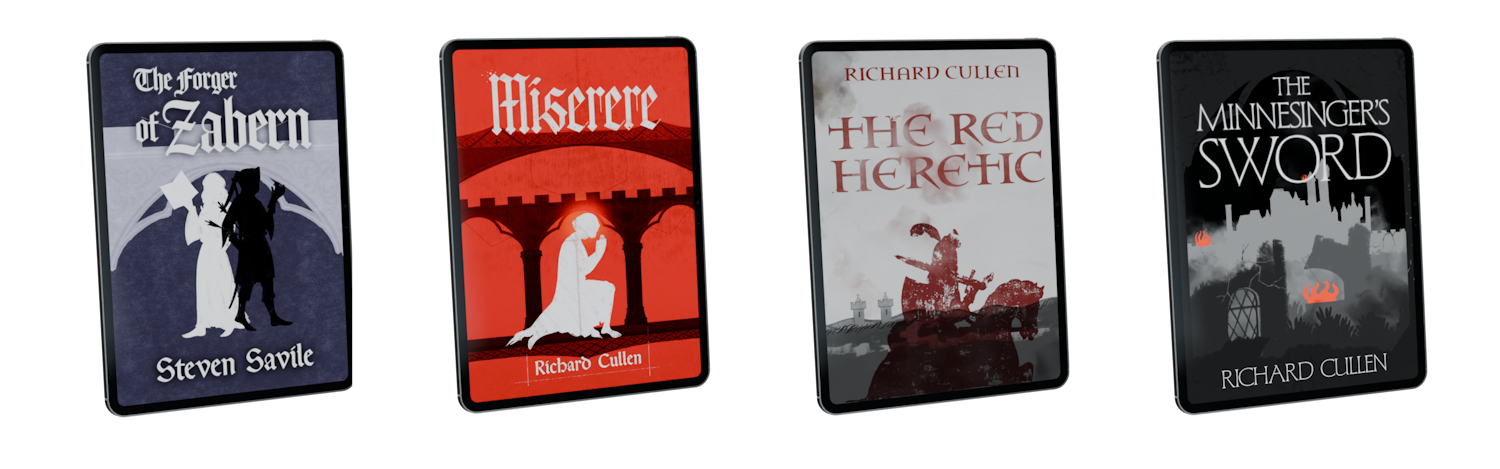
Every reward is built around books. The anthology is the heart of it, but there are four full novels written by Steven Savile and Richard Cullen and you can start reading two of them right now. Ready to enter the world of A Century of Swords? Read the free samples CLICK HERE.
Each pledge to the campaign comes with rewards: the Anthology, the novels, audiobooks, an illustrated art book, a guide to heraldry, fireside stories, and so much more.

The main focus of this campaign is the anthology as well as the novels which will be covered below. But before we get to those we also have a handful of fireside stories which will be included at the lower pledge tiers.

We also have a brand new 100 page (30,000 word) serial written by Mireille Calmel in six parts. All our Kickstarter backers will get a copy of this serial and it will be available in French, English, German and Spanish!


The fourteenth century we are building is vast, and it will not hold still. Plague and famine pass through it. Borders move. Free companies sell their swords to whoever is paying that season. The old certainties of chivalry are being snuffed out like candles… and the long war that will consume the century is coming.
And like that world, the Anthology widens and deepens as the campaign does, each new cohort of authors — each new gathering of pages in the book — adding their stories to different corners of it, bringing it to life.
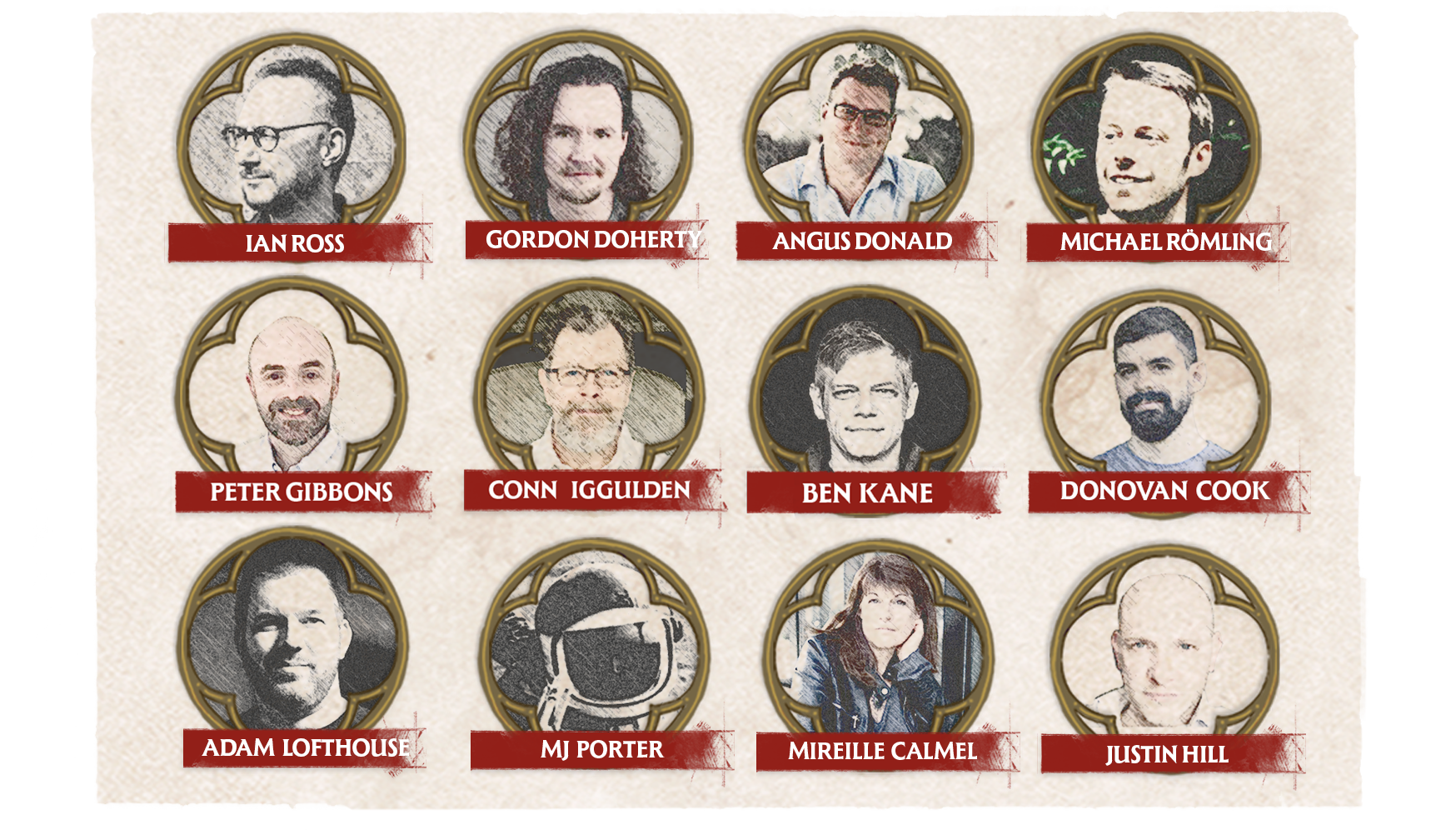
We have assembled an incredible array of authors.
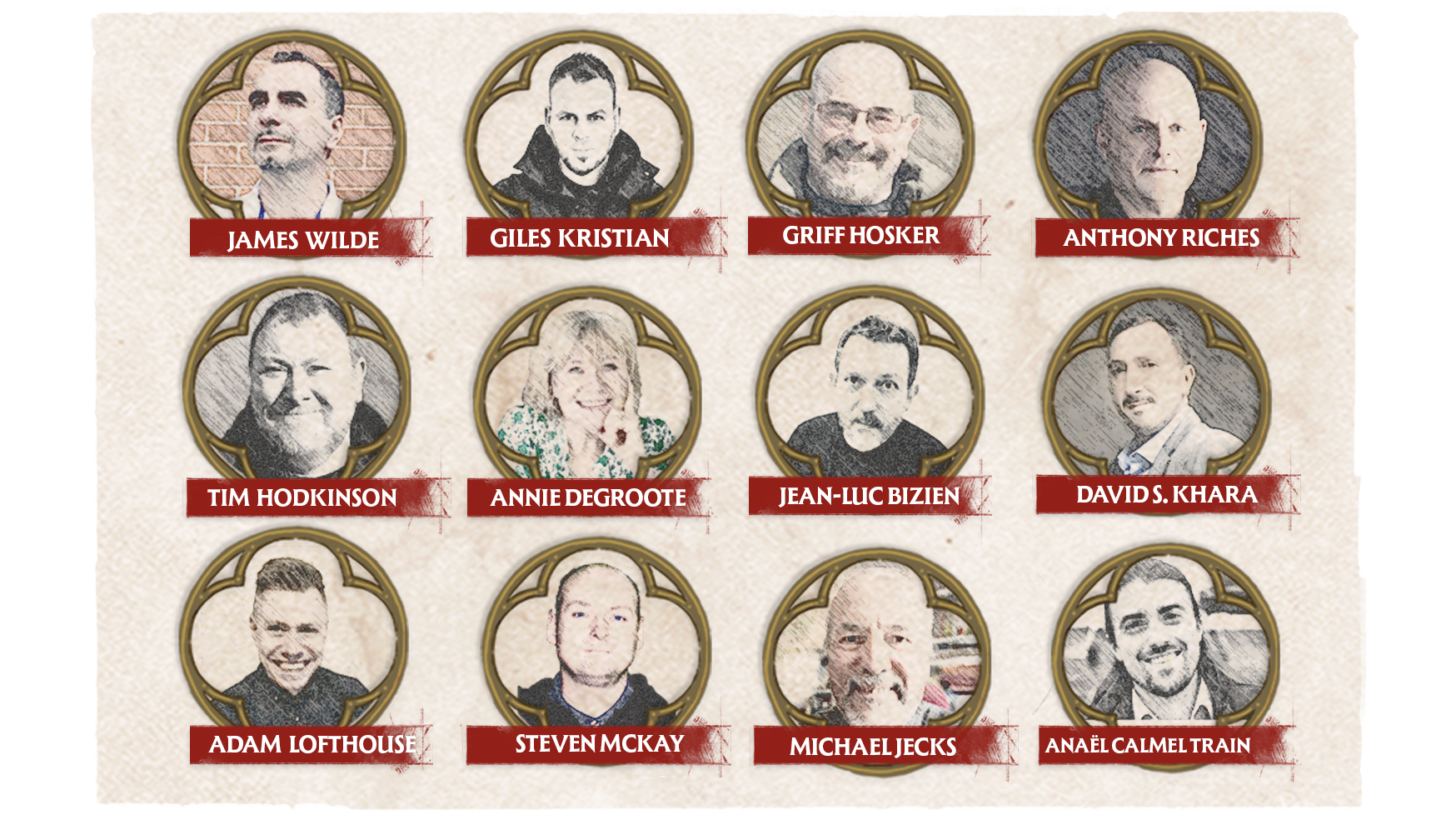
Genuinely some of the very best working in the field today. So many, in fact, that we have had to group these 35 authors into separate cohorts.
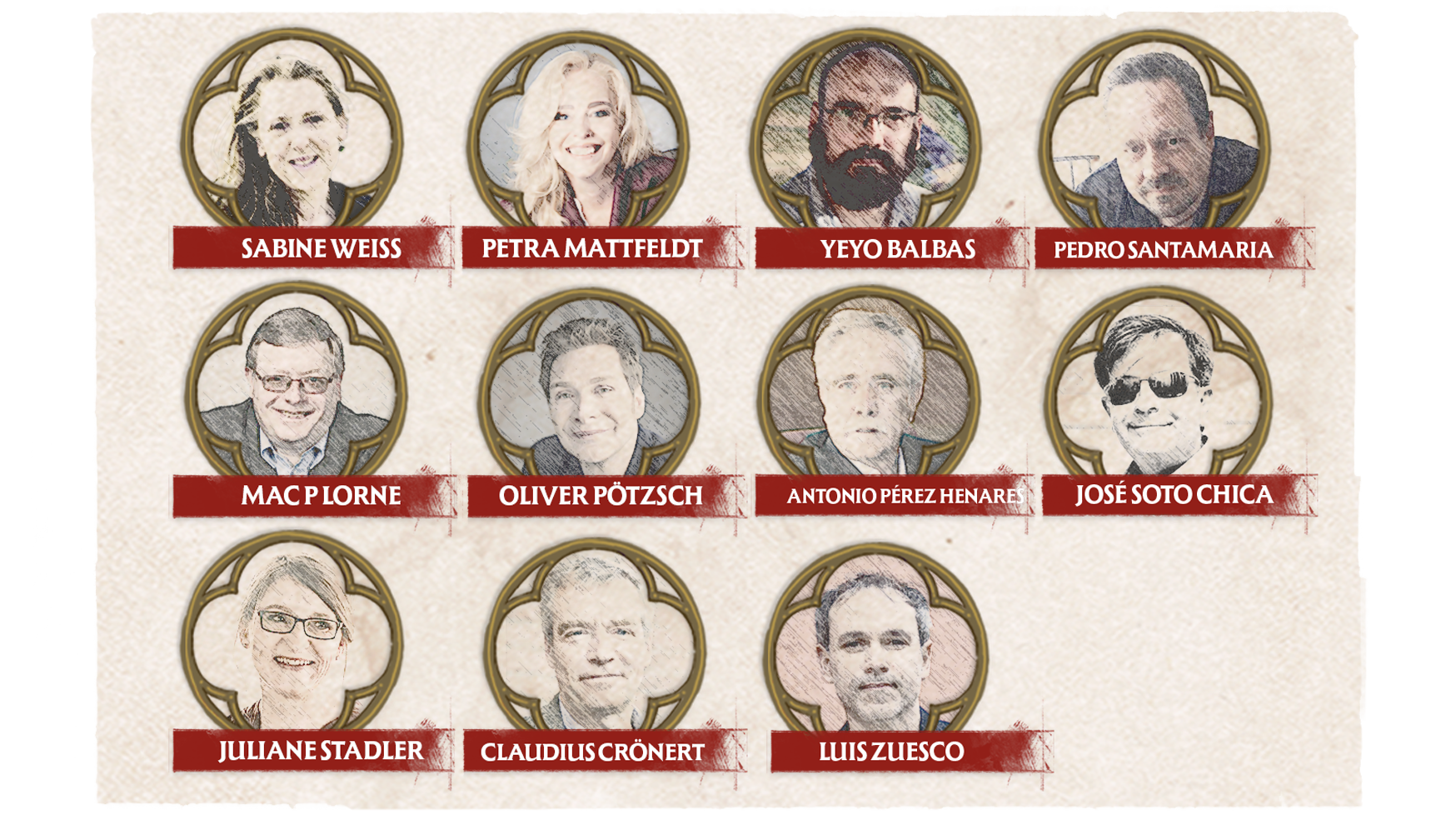
There are also French, Spanish and German author cohorts!
All authors have signed with us and are ready to write new fiction as stretch goals unlock!
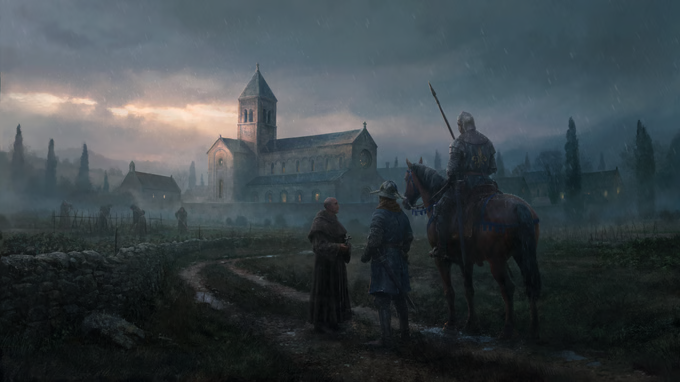
If you've read this far, one more thing. Kickstarter campaigns live or die in their first days, and no algorithm moves the needle like a reader telling another reader. If you know someone who loves ripping historical adventure stories, send them here.
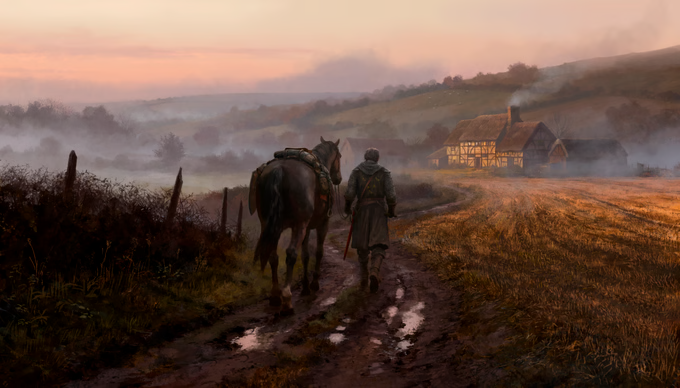
For more details about specific cohorts and author backgrounds please click on MEET THE AUTHORS section in the bookmarks on the left or scroll to the bottom of the page.
Let’s talk about the novels for a moment. Four doors into the world, and four very different books. Each one stands on its own two feet. Start reading two of them right here: the openings are yours, free, before you decide so [CLICK HERE]. The samples are completely free!
The four novels will be delivered to you on a steady schedule throughout the campaign year. We are talking genuinely gripping historical fiction, written by two award winning and bestselling novelists. Combined they are 900 pages of new fiction and stretch goals will unlock more novels to bring the count up to 2000 pages.
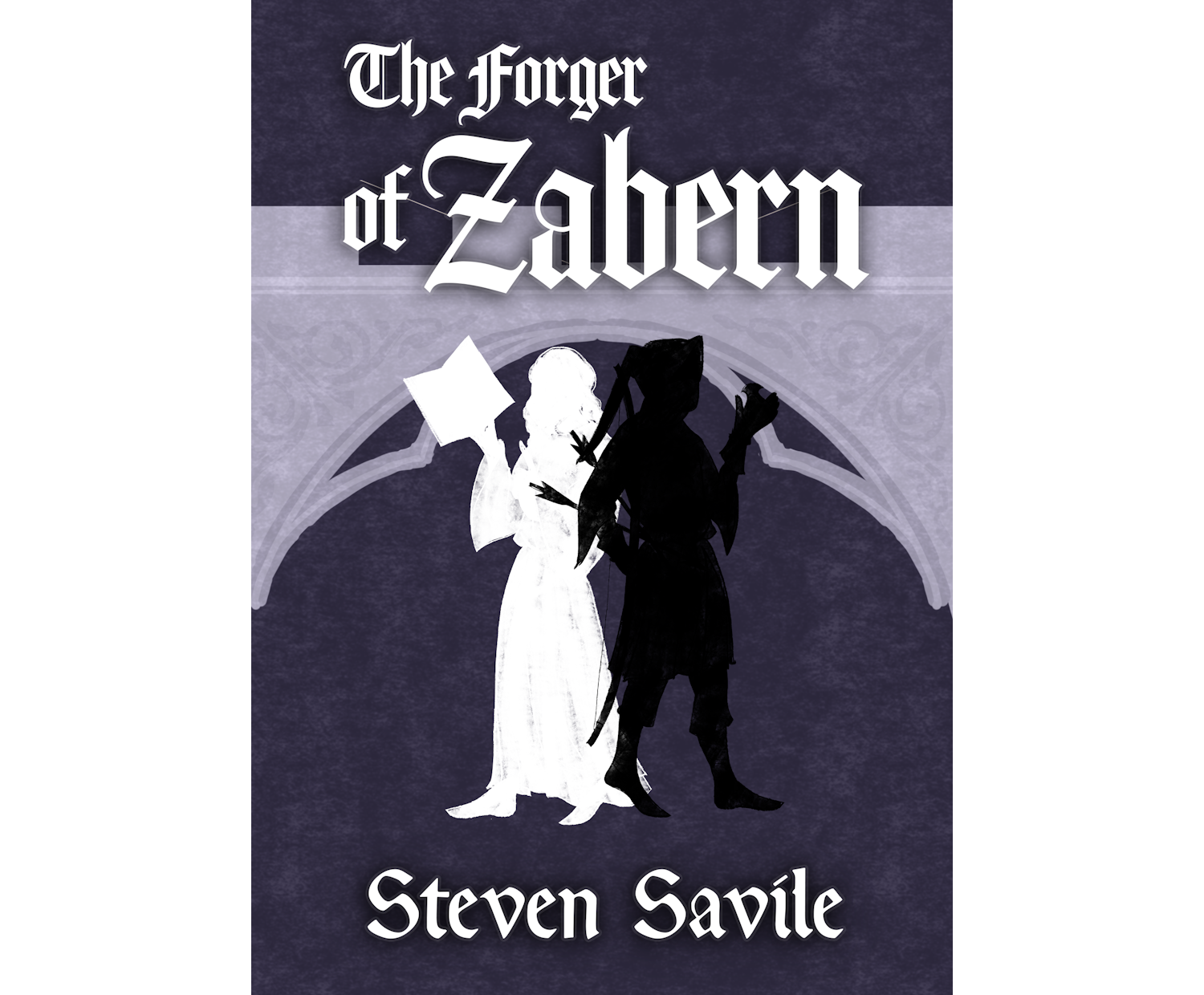
At the centre is The Forger of Zabern by Steven Savile, the first of a quartet and the doorway into our world. In the dying winter of 1313, Brother Konrad, a monk trained in forgery and cipher, is told the most dangerous truth in Christendom: the Templar heresy was a lie. The Pope destroyed the Order for gold, and the proof is inside the Papal court of Avignon. He must hide in plain sight, a lowly scribe living among the very men whose crimes he seeks to expose, and escape with that proof if there is ever to be justice for the dead knights.
Alongside it stand three Companion Novels written by Richard Cullen:
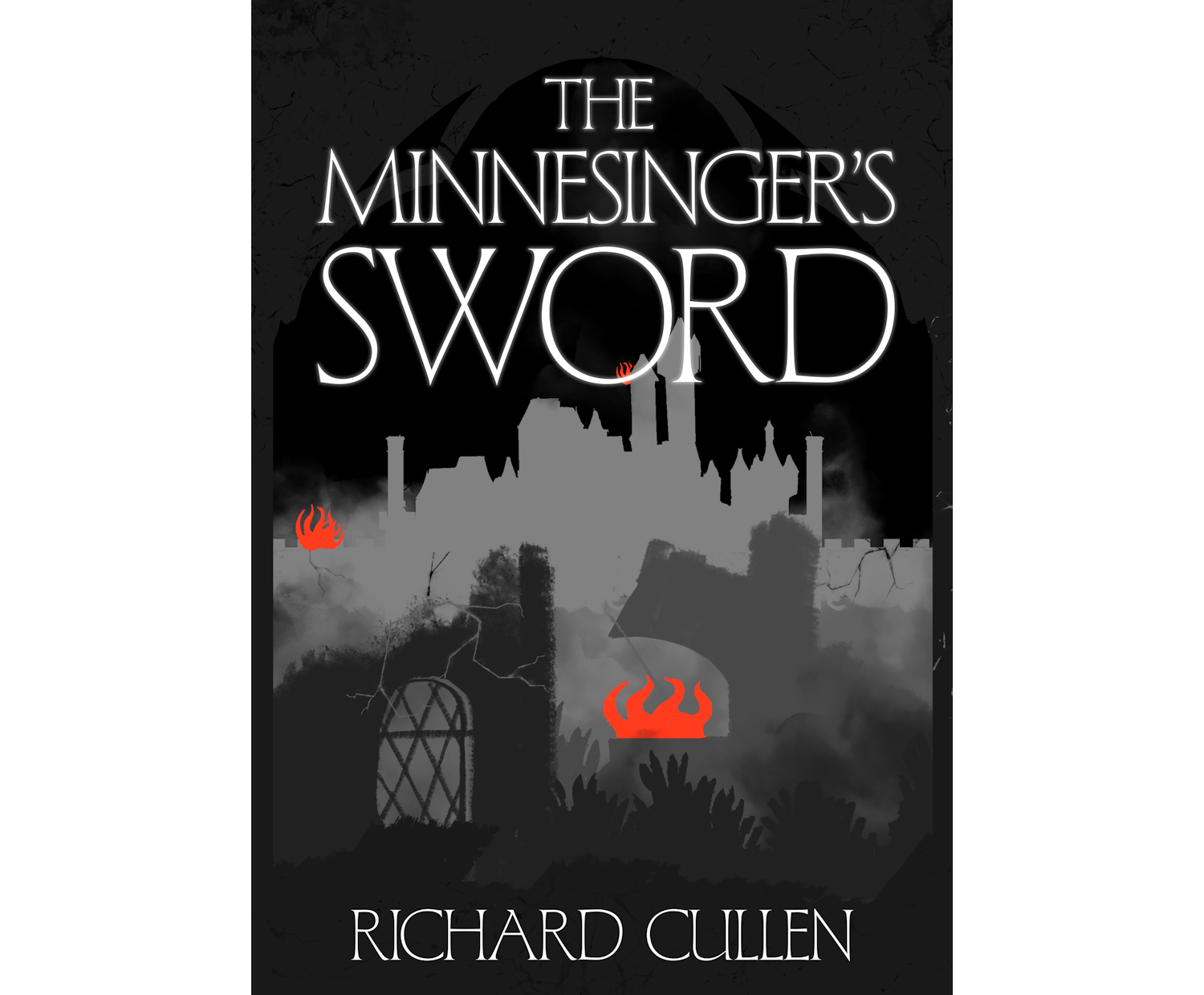
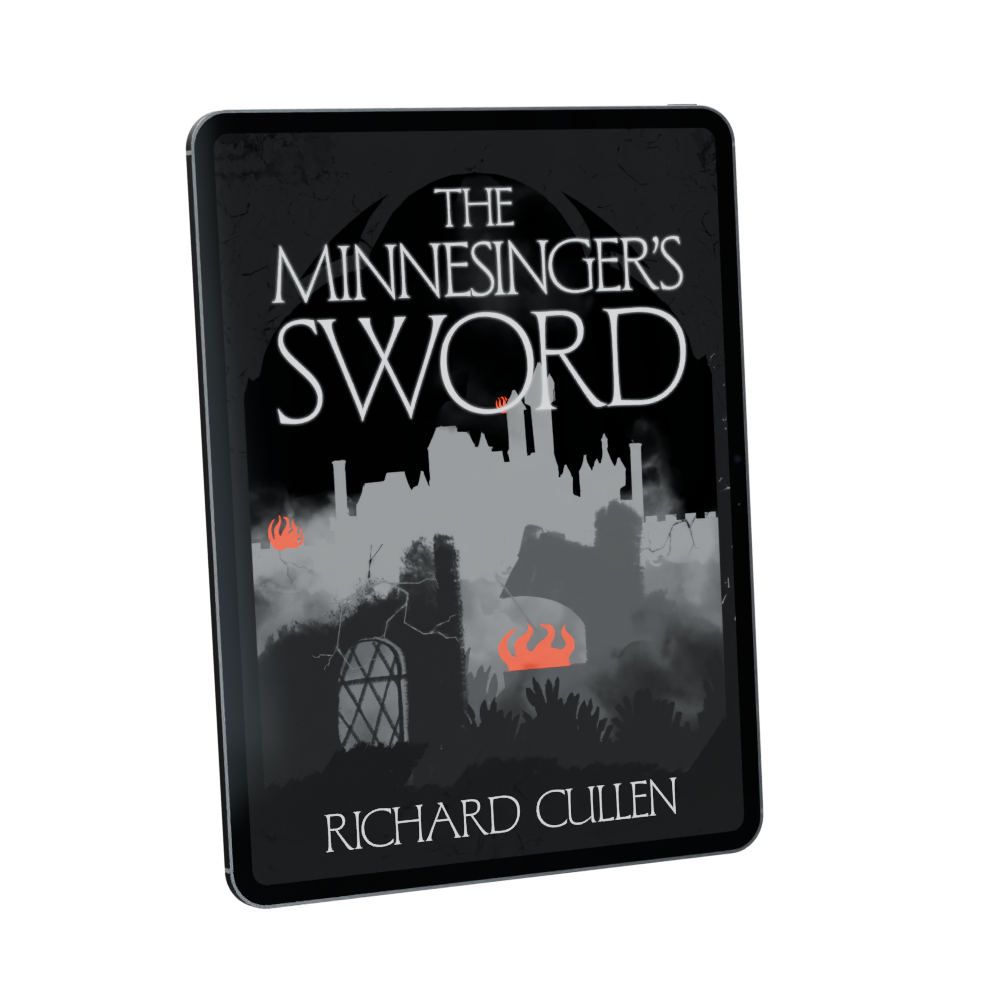
In The Minnesinger’s Sword, Reinmar von Kaltenberg (mercenary, spy and celebrated minstrel) is sent to seize a mountain fortress armed with a lute, a longsword and beautiful lies. Its formidable lady, Mechthild von Sternberg, has no intention of yielding. But a thousand men are marching south behind the Black Dragon, a warlord with a personal debt carved into the scar tissue of his face. The siege will make allies of two people who came prepared to be enemies.
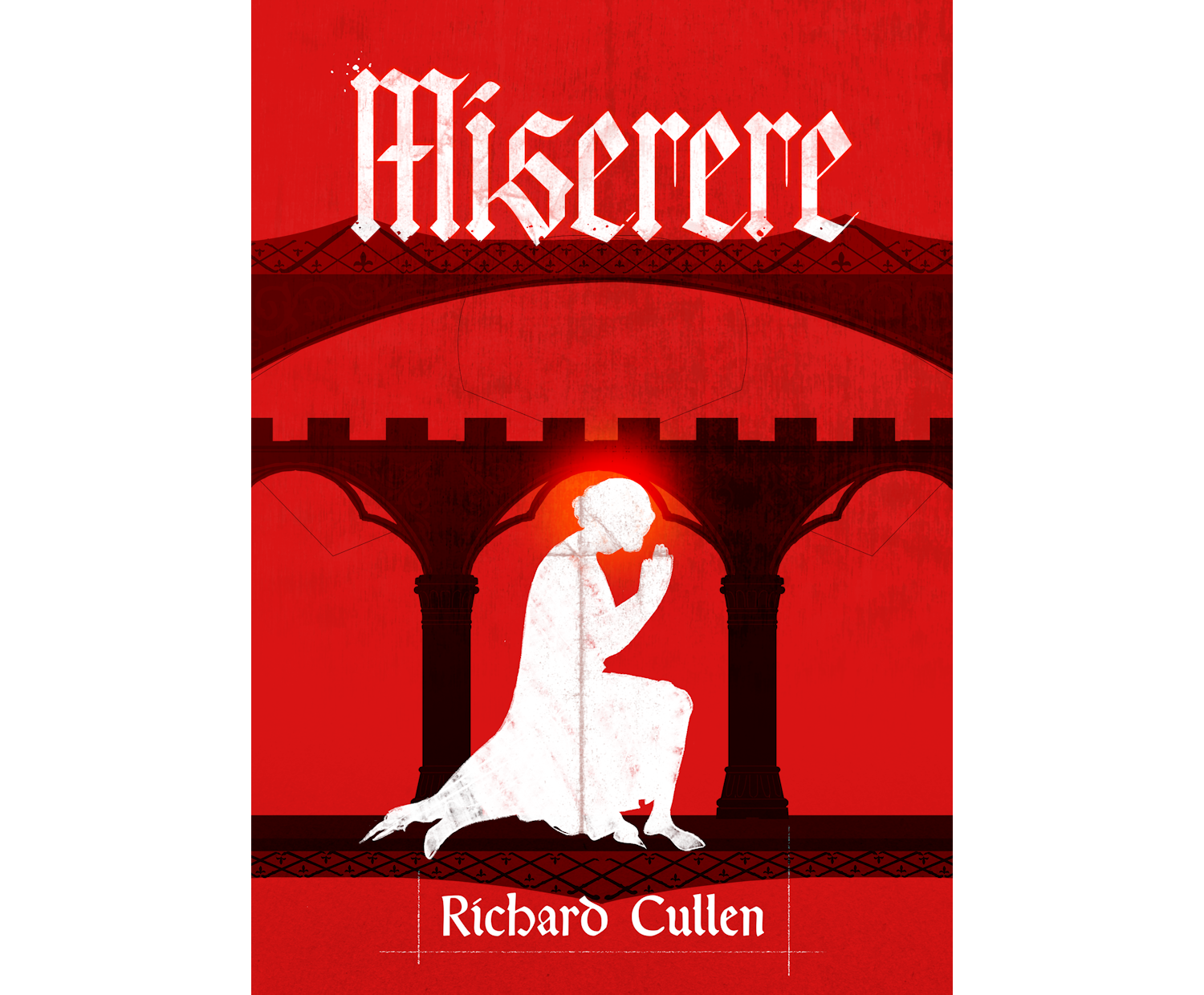
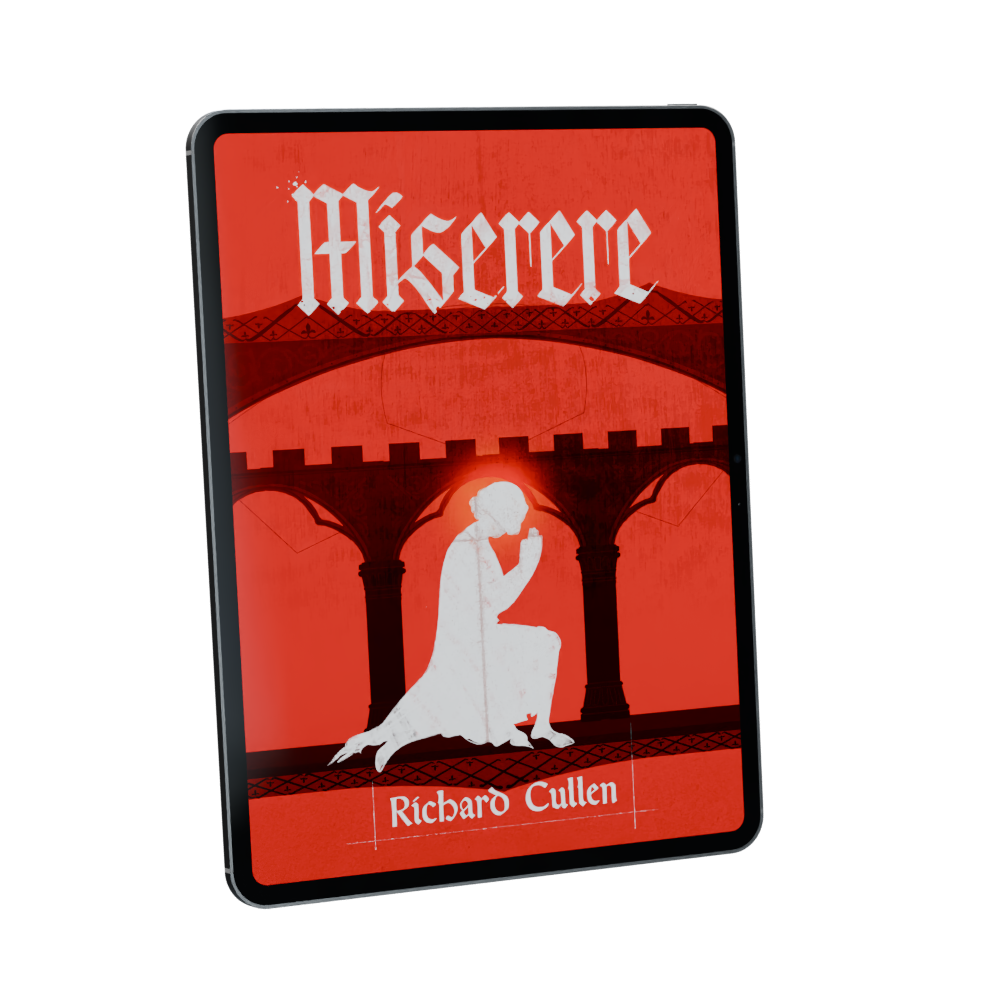
In Miserere, a bishop’s enforcer discovers forged evidence in a family chapel, and recognises the hand of his master’s own clerk. Every threat, every collection, every drop of blood on Arnaud de Vaucluse’s hands has served a lie. Now, hunted through the frozen hills of France by a ruthless killer known as Le Saigneur, he must confront a question twenty-eight years in the making: can a lifetime spent serving evil ever be redeemed?

In The Red Heretic, the men of the Northern Marches have whispered the same prayer for twenty years: do not let the Red Knight come for us. Then Sir Thomas Vane kills a corrupt bishop at the altar. Three strokes. One mortal sin. Stripped of everything and left to die, he discovers his former right hand has taken his armour, his army and his identity. His only hope lies with the peasants he once terrorised—and to kill the Red Knight, he must first prove the legend was always a lie.
And these are only the beginning...
Are you curious to dig deeper into the world that we have created? Check out the following two books!
Heraldry was the visual language of medieval Europe: the means to identify a knight on the battlefield, a contestant at the tournament ground, a lord in his estate, or even the family alliances in a marriage.

This is a guide to that language and its early history,written by Adam Tuck, Lancaster Herald at the College of Arms. The office of Lancaster Herald was first recorded in 1347, when its holder made a proclamation at the siege of Calais, in the very war our world is built upon – so your guide to the arms of the fourteenth century isa successor to a herald who walked it. Believe us when we say that for a project interested in honouring the past, there is no better person to author this book.
A gallery of the world itself, drawn from the concept art, interface and three-dimensional work behind the game: the landscapes and free cities, the armies and castles, the faces and banners of a fourteenth century built from the ground up by a studio of veteran game developers.
This is the world the novels inhabit, rendered in full. The places you have been reading about become the places you can see. And it grows as the campaign does, expanding page by page as its stretch goals unlock.
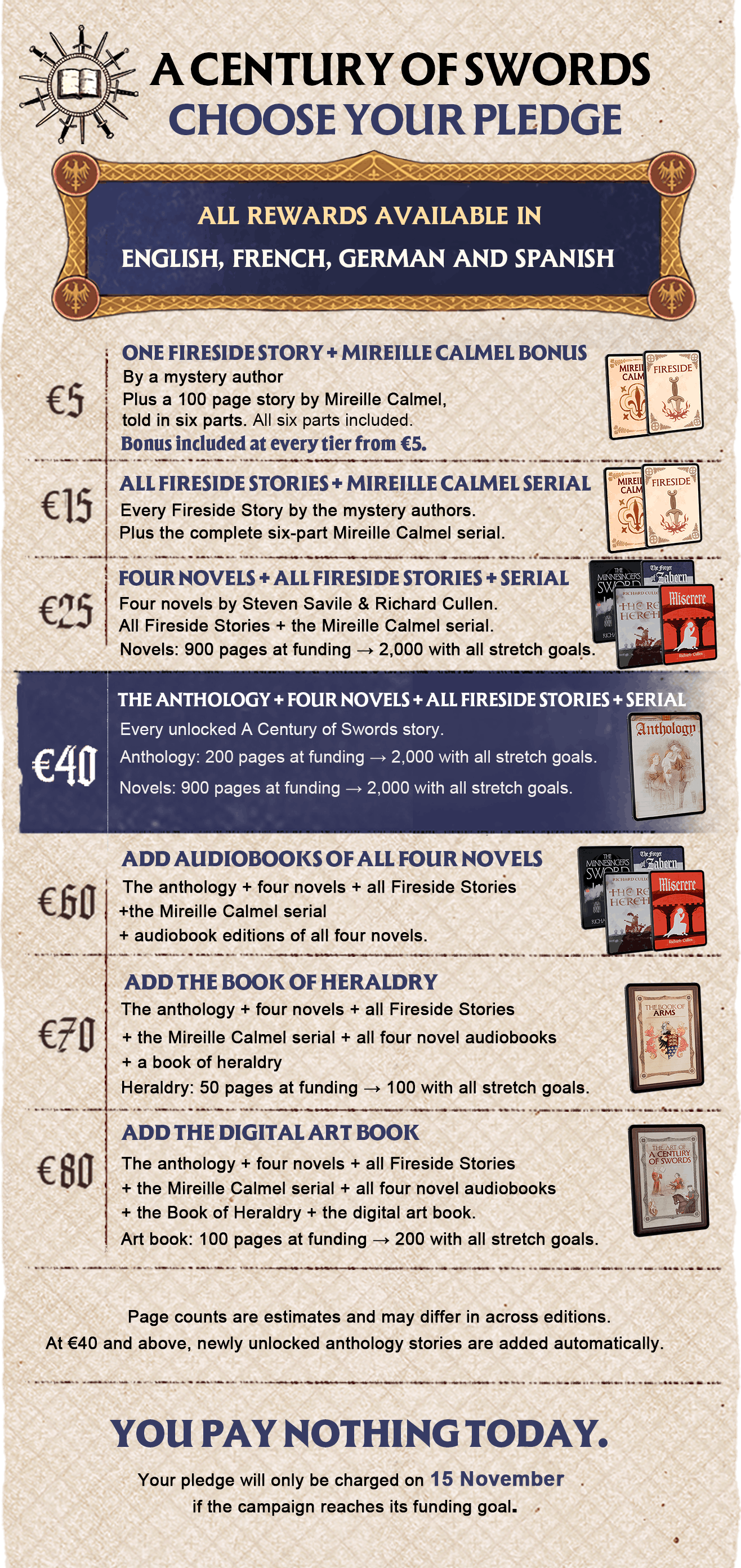
We have created for you several pledge tiers ranging from €5 to €80 and each tier comes with a set of rewards. The pledge tiers are additive so if you pledge at the €25 tier then you will also get all rewards from the lower tier €5 and €15 as well.
If all the Stretch Goals are met we're talking about a staggering 4300 pages of new fiction for you to devour across the various reward tiers.
Because digital is how we give you more. Every pound of a print run is spent on paper, warehouses and shipping. These are costs that swallow campaigns and add nothing to the stories. By keeping this campaign digital, everything you pledge goes into the books themselves: more authors, more stories, more art, bigger narrators. It's why a single stretch goal can put three new writers into your anthology overnight, and why every unlock reaches every backer instantly, wherever in the world you're reading. No customs forms, no shipping tiers, no eighteen-month fulfilment gap. You pledge, the campaign grows, the books arrive.
We want to set expectations and be clear that both the anthology and the novels will initially be delivered in digital format only. By focusing on digital we can deliver more stories at an attractive price to you. Also due to the sheer volume of text to be written if all stretch goals are met it becomes hard to estimate the printing cost, shipping cost etc in advance.
As for physical editions we are already in discussions with several publishers across Europe and after the campaign is concluded we hope to offer heavily discounted physical versions as add-ons for our Kickstarter backers.
That said, we hear you: some stories deserve a spine and that good old fashioned new book smell. Reading is after all a tactile experience. We are actively exploring print editions, and backers will be the first to know the moment we have something worth holding.
The first tiers introduce you to our setting with wallpapers, hand-drawn maps, and 3D prints. Higher tiers build your library novel by novel; from the full set upward, every tier includes everything below it. Wherever you start, the stories are yours to keep.
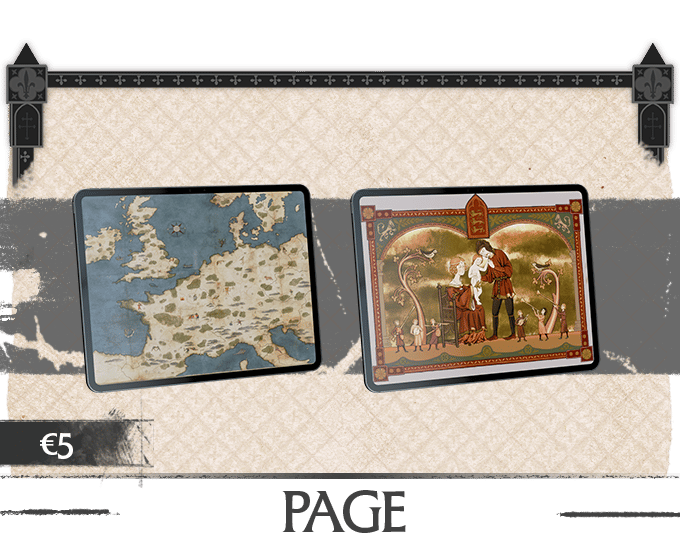
- As a Page you will get one Kickstarter Exclusive "Fireside stories #1" which is a 5000-word short story written by a mystery writer.
- You get the hand-drawn map of medieval Europe and the first digital wallpaper pack, plus our genuine thanks for helping bring the anthology into the world. Any extra digital wallpaper pack stretch goals apply from this tier and above.
- All rewards from lower tiers included.

- As an Esquire you will get two extra Kickstarter Exclusive "Fireside stories" for a total of three, each 5000-words long.
- If you are interested in our 3D-printable model packs then this is the tier for you. We have a team of 3D-print enthusiasts who will print and test models to ensure these will look great and print well. We start out with six units from the levy troop line. However, any 3D-print stretch goals will apply to this tier and above by adding in new units, siege engines, castle modular sets and more.
- All rewards from lower tiers included.
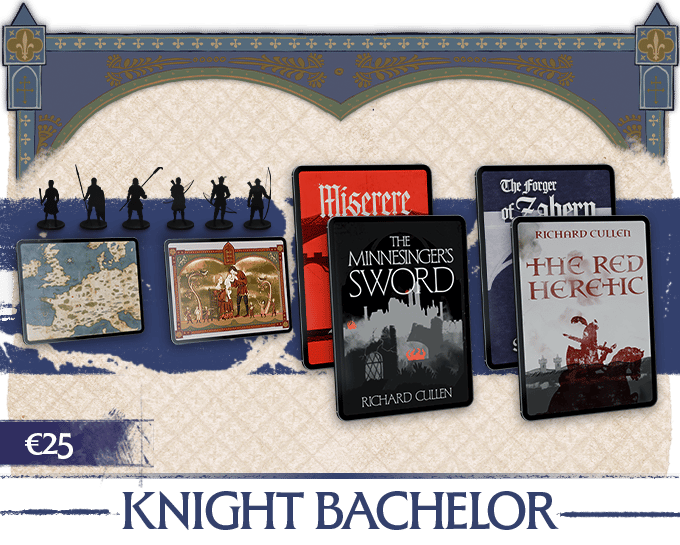
If you prefer full length novels then this is the tier for you as it comes with digital editions of our four novels.
- The Forger of Zabern (80,000 words)
- Miserere(60,000 words)
- The Red Heretic (60,000 words)
- The Minnesinger's Sword (60,000 words)
- Any stretch goals related to digital novels apply to this tier and above.
-All rewards from lower tiers included.

- The anthology is our core focus with this campaign. It starts at 60,000 words but may grow to many times this size as higher stretch goals are met and new author cohorts join
- Every anthology stretch goal unlocked during the campaign lands in this tier and above
- All previous stretch goals from lower tiers also included
- All rewards from lower tiers included

- How we read is changing. In 2025 the UK audiobook market now accounts for a tenth of the consumer book market, with readers more likely to listen to a book than ever before.
- Adds audiobooks of all four novels.
- Every audiobook stretch goal applies to this tier and above.
- All rewards from lower tiers included.

- Adds the 50-page book-of-arms booklet, a guide to the history of heraldry in medieval Europe.
- Every book-of-arms stretch goal applies to this tier and above.
- All rewards from lower tiers included.
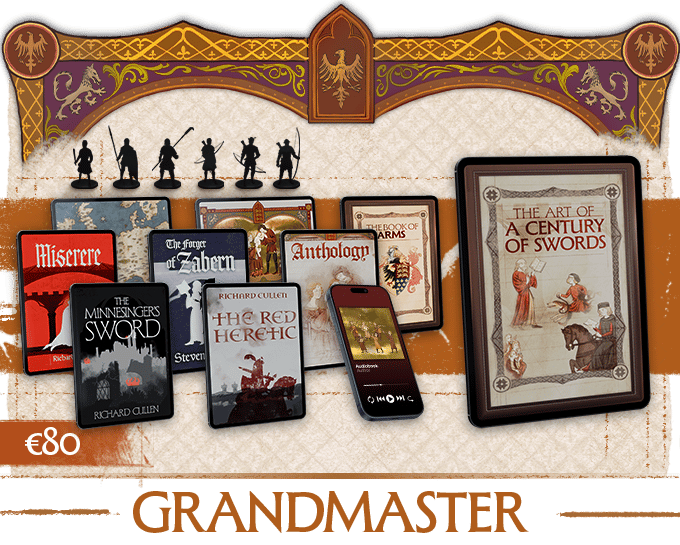
- Adds the 100-page digital art book, which includes a collection of concept art and illustration inspired by medieval art. In addition sketches, historical research notes, art direction notes and interviews with the artists.
- Every art book stretch goal applies to this tier and above.
- All rewards from lower tiers included.
This is where the campaign comes alive. Almost every milestone adds something for everyone — more stories, more authors, more novels, higher production values, and ultimately unlocks something rather unique — and every addition reaches backers who pledged before the goal was hit.
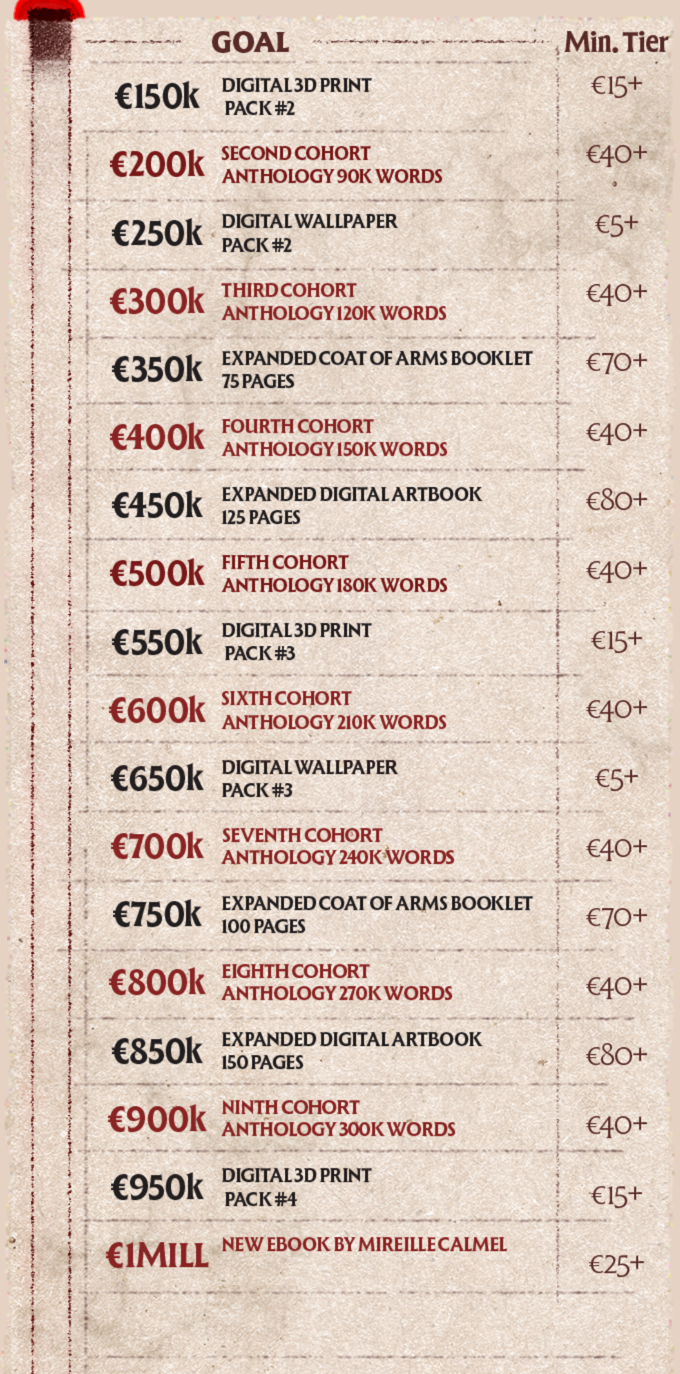
The exciting part for us, and we hope for you, is what changes as the campaign grows. And what is that, you ask? The narrator. Reach some of the campaign’s later milestones and the narration passes to some very well known voices, one book at a time.

At the €1,000,000 stretch goal we will add an entirely new ebook which is an original Mireille Calmel novel created especially for the world of A Century of Swords. We have similar plans for the €2,000,000 and €3,000,000 stretch goals.
A pledge for the Anthology is more than buying a book. Think of it this way. The books from the reward tier arrive first, then the audio editions, and then more of both, unlocking across the months ahead.
How many extra books will you get and who are the authors? That, friends, depends upon how many stretch goals we unlock, but we really want it to be a lot. We want nothing more than for the campaign to keep rewarding your support long after it closes.
Here's what backing today actually does. Every pledge, from the first hour, pushes the campaign toward its next unlock, and every unlock lands with the backers already inside.
These stories started at the fireside, carried from one memory to the next. Now they're carried from one reader to the next.
Be one of the carriers.
— Steve, Rich, and the team

In the first cohort we are gathering brand new fiction into a 60k word anthology from:
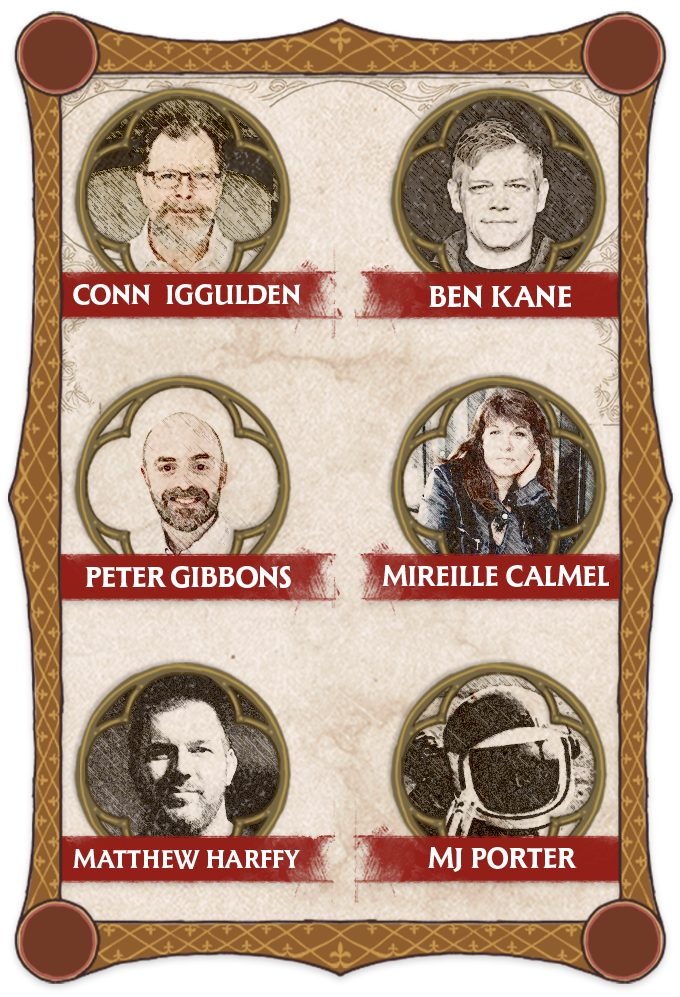
Conn Iggulden: one of the most successful historical novelists alive, with over ten million copies sold worldwide. Across his Emperor (Julius Caesar), Conqueror (Genghis Khan), Wars of the Roses, and Athenian series, plus the standalone Dunstan, he has defined epic historical storytelling for a generation. In 2007 he became the first author ever to top the UK fiction and non-fiction bestseller lists at the same time.
Ben Kane: Sunday Times bestseller with over 2.25 million copies sold in fifteen languages and eleven Sunday Times bestsellers to his name. One of the foremost voices in Roman military fiction — the Forgotten Legion, Spartacus, Hannibal, and Eagles of Rome series — famed for visceral, meticulously researched battle writing.
Matthew Harffy: bestselling author of the Bernicia Chronicles, which follow the warrior Beobrand through seventh-century Northumbria across eleven novels, from The Serpent Sword to Bane of Bernicia, and of the Viking-age A Time for Swords series. Shelved alongside Bernard Cornwell and praised by fellow novelists as a rightful heir to David Gemmell, he also co-presents the popular historical fiction podcast Rock, Paper, Swords!
MJ Porter: a prolific and bestselling specialist in early-medieval England, author of more than thirty books across the Eagle of Mercia Chronicles, the Ninth-Century Mercian series and the Brunanburh series, as well as Anglo-Saxon non-fiction. With over one million books in print, the Eagle of Mercia Chronicles take Icel, a boy who wanted to be a healer, and make him a reluctant warrior of Mercia.
Peter Gibbons: winner of the 2022 Kindle Storyteller Award, and the bestselling author of the Viking Blood and Blade Saga, the Saxon Warrior series and the Chronicles of Arthur. Since his 2021 debut he has built a devoted following in Viking and Saxon adventure, with work compared to Bernard Cornwell, Giles Kristian and Conn Iggulden.
Mireille Calmel: Le Lit d'Aliénor, her Eleanor of Aquitaine saga, and Le Bal des louves have made her one of France's bestselling historical novelists, with more than eighteen million readers and translations in fifteen languages, famed for fierce heroines and adventures woven from history and legend.

The anthology grows to 90k words:

James Wilde: the name under which the award-winning novelist Mark Chadbourn writes historical fiction. His Times-bestselling Hereward series brings to brutal life the English outlaw who resisted the Norman Conquest, while his Dark Age sequence, Pendragon, Dark Age and The Bear King, plunges into the end of Roman Britain and the first seeds of the Arthurian legend. His work has been described as bridging Game of Thrones and Bernard Cornwell.
Giles Kristian: Sunday Times bestselling novelist, of part-Norwegian descent, who made his name with the acclaimed Raven and Rise of Sigurd Viking sagas. He co-wrote Wilbur Smith's number one bestseller Golden Lion, reimagined the Arthurian legend in his bestseller Lancelot and its sequels Camelot and Arthur, and won the 2022 Wilbur Smith Adventure Writing Prize for his thriller Where Blood Runs Cold.
Tim Hodkinson: Northern Irish novelist whose degree in Medieval English and Old Norse literature underpins his acclaimed Viking saga, The Whale Road Chronicles. He also writes the medieval Knights Templar adventure series that begins with Lions of the Grail, and his fiction is shelved alongside Bernard Cornwell, George R.R. Martin and Ben Kane.

With the French cohort the anthology grows to 120k words.
IMPORTANT! Our French, German and Spanish authors write their stories in their own language. Every story will be available in both the original and other languages.

David S Khara: one of the leading names in French thriller writing, whose Bleiberg trilogy — Le Projet Bleiberg, Le Projet Shiro, Le Projet Morgenstern — has sold more than 200,000 copies in France, been adapted as a graphic novel series at Dargaud, and reached English-language readers as the Consortium thrillers. A former AFP journalist and advertising creative director turned novelist and screenwriter, he belongs to France's Ligue de l'Imaginaire alongside Bernard Werber and Maxime Chattam, and Library Journal has likened his stripped-down, headlong pace to Ian Fleming's Bond novels. His newest series, Le Laboratoire des ombres, opens in London anno 1841.
Jean-Luc Bizien: came to fiction through games, designing the acclaimed roleplaying games Hurlements and Chimères (Prix Casus Belli) before writing more than fifty books, including a hugely successful line of interactive gamebooks for Gründ. He is best known for Les Enquêtes de l'aliéniste, which follows the alienist Simon Bloomberg through the fog, catacombs and criminal underworld of 1890s Paris, published in 10/18's celebrated Grands Détectives line and now by L'Archipel. His work has won the Prix du Roman d'Aventures, the Prix Lion Noir, the Prix Sang d'Encre and the Prix Dora-Suarez.
Annie Degroote: the great novelist of French Flanders, and one of the most decorated. Her debut La Kermesse du diable swept three literary prizes in 1994 — the Prix Bernanos, the Prix Gabrielle-d'Estrées and the Prix de la Renaissance française — and launched some twenty historical sagas of Flanders and the Nord, from Le Cœur en Flandre to Les Filles du Houtland, most of them in Presses de la Cité's landmark Terres de France collection. A conservatory-trained actress of stage and screen before she was a novelist, she was made Chevalière des Arts et des Lettres in 2023.
Anaël Calmel-Train: a new voice in French medieval fiction, with history in the blood: the son of Mireille Calmel, he debuted in 2021 with Le Serment de Jaufré, a prequel to his mother's Le Lit d'Aliénor which she prefaced herself. A sound engineer and devotee of medieval music, he sets everything he writes within sight of his home town of Blaye in Aquitaine — from the Viking invasions of La Malédiction d'Irminsul to the two volumes of Le Sang du Sacrifié — and publishes independently, funding each book directly with his readers.

The anthology grows to 150k words:

Adam Lofthouse: Roman military novelist whose debut, The Centurion's Son, launched the Path of Nemesis trilogy, since followed by the Victorinus, Enemy of the Empire and Shadow of Rome series. He came to Rome as a teenager through Conn Iggulden's Gates of Rome and has written about the legions ever since, which makes his place in a book headlined by Iggulden a story in itself.
Steven A. McKay: Scottish bestselling author whose Forest Lord series gave Robin Hood a gritty fourteenth-century retelling, opening with the chart-topping Wolf's Head. He has since written the post-Roman Warrior Druid of Britain Chronicles and an Alfred the Great trilogy, and contributed the backstory and lore for the video game HOOD: Outlaws and Legends.
Michael Jecks: author of more than fifty novels, including the thirty-two-book Last Templar Mysteries, the Dartmoor-set medieval crime series The Times called "the most wickedly plotted." A former Chair of the Crime Writers' Association and a founder of the Medieval Murderers, he was shortlisted for the Theakston's Old Peculier Crime Novel of the Year, and also writes the Hundred Years' War Vintener novels and the Tudor mysteries of the gloriously cowardly assassin Jack Blackjack.

With the German cohort the anthology grows to 180k words.
IMPORTANT! Our French, German and Spanish authors write their stories in their own language. Every story will be available in both the original and other languages.
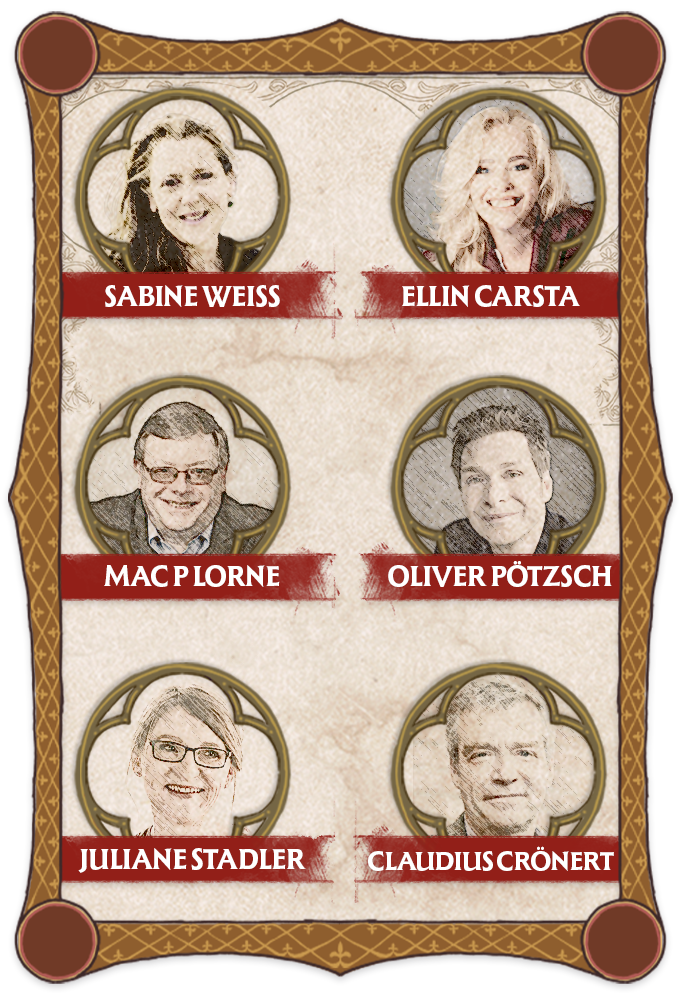
Sabine Weiß: a SPIEGEL-bestselling German novelist with more than twenty-five books to her name, whose historical fiction ranges from Hanseatic Lübeck and the shrine-builders of medieval Cologne to Madame Tussaud's Paris and the lighthouse-building Stevensons of Scotland. Born in Hamburg in 1968, she read German literature and history before a career as a culture and media journalist, and has twice been shortlisted for the HOMER Prize, Germany's award for historical fiction. She researches every novel on location and also writes the popular Sylt crime series, now ten books strong.
Ellin Carsta: one of the most widely read historical novelists in Germany, with more than four million copies sold through her publisher Tinte & Feder alone. Die heimliche Heilerin, which opens in 1388 with a young healer accused of witchcraft and carries her into the forbidden study of medicine in Cologne, reached English readers as The Secret Healer and The Master of Medicine, and her Cologne cloth-trader's tale Die unbeugsame Händlerstochter as The Draper's Daughter. She also writes as Caren Benedikt with settings ranging from plague-year Bremen in 1349, a grand hotel on the Baltic in the Golden Twenties, and fifteen novels under her own name, Petra Mattfeldt.
Mac P. Lorne: the pen name of Matthias Lisse, and the author of fifteen historical novels for Droemer Knaur. He won Germany's Goldener HOMER, the country's leading prize for historical fiction, in 2025, after taking its bronze three years running from 2020 to 2022. Der Herr der Bogenschützen follows John Holland, disinherited son of an executed duke, from outcast to commander of the English longbowmen — through Agincourt and across the path of Joan of Arc. He grew up in East Germany, where the state steered him out of history and into veterinary medicine, escaped to the West in 1988, and spent twenty-five years breeding horses, which explains the authenticity of his mounted warfare.
Oliver Pötzsch: bestselling German novelist with more than three million copies sold and translations into over twenty languages. He is a direct descendant of the Kuisl family of Schongau: fourteen of his ancestors were executioners, among them Jakob Kuisl (1612–1695), the hero of his ten-volume Hangman's Daughter saga — a series that became Amazon Publishing's first million-copy English-language bestseller and a #1 US Kindle bestseller. A former journalist and documentary filmmaker for Bavarian Broadcasting, he has won the Goldener Homer and France's Prix Historia, and his Vienna-set Totengräber novels are fixtures on the Spiegel list.
Juliane Stadler: archaeologist turned novelist, whose Spiegel-bestselling debut Krone des Himmels carries a young healer across Europe on the Third Crusade won the Silberner HOMER in 2022. She read prehistory and Near Eastern archaeology at Heidelberg and holds a doctorate on early Celtic burial customs; to write the book she retraced Barbarossa's crusade route overland from Regensburg to Anatolia, having already dug at many of the sites. König der Turniere follows William Marshal through the tournament circuit of the 1180s, and her next novel takes on Eustache the Monk, the Channel pirate behind the Robin Hood legend.
Claudius Crönert: German novelist and former political journalist whose fifteen books range across a millennium of European history, from the Frisian wars of the eighth century and the feuding heirs of Charlemagne to the raising of Notre-Dame and Westminster Abbey. Born in Hamburg and trained in philosophy and art history, he reported for German radio and television before turning to fiction, and won a HOMER Prize for historical literature in 2016 for Freyas Land. Welt am Sonntag credits his Carolingian epic Das Erbe der Karolinger with "the feat of telling history as grippingly as a crime novel"; his next takes on the fall of Constantinople in 1453.

The anthology grows to 210k words:
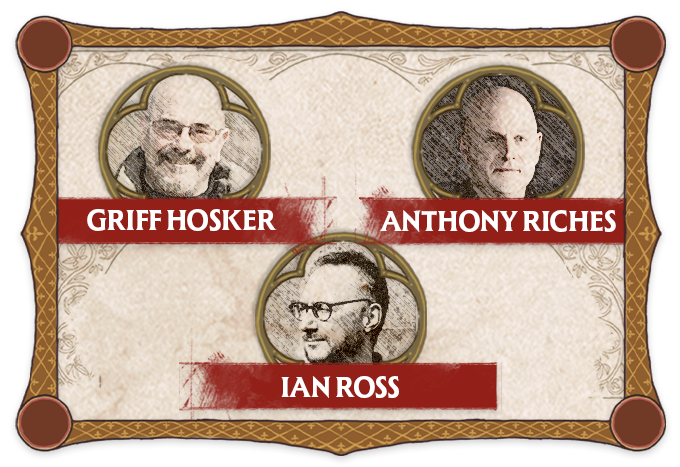
Griff Hosker: one of historical fiction's most prolific authors, a former teacher who has written close to two hundred novels and reports more than two and a half million sales. Since his debut, The Sword of Cartimandua, he has ranged from Roman Britain and the Viking age of his Dragonheart saga to the medieval Anarchy and the Hundred Years' War of his Sir John Hawkwood series, following the famous English mercenary captain.
Anthony Riches: Sunday Times bestseller and author of the Empire series, fifteen novels of Roman military adventure following Marcus Valerius Aquila, sparked by a visit to Housesteads fort on Hadrian's Wall. A Military Studies graduate of Manchester University, he also wrote the Batavian Revolt trilogy The Centurions and, in 2026, launched the Trojan War saga Swords of Troy. The Times calls him "a master of the genre"; Conn Iggulden, "fast-paced and gripping."
Ian Ross: author of the six-book Twilight of Empire series, which carries the soldier Aurelius Castus through the violent rise of Constantine, and of the de Norton trilogy — Battle Song, War Cry, King's Enemy — set amid the baronial wars of thirteenth-century England. A painter by training who has spent over a decade researching the late Roman army, he is praised by Conn Iggulden as "hugely enjoyable" and by Ben Kane as "a thumping good read, well crafted, atmospheric."

With the Spanish cohort the anthology grows to 240k words.
IMPORTANT! Our French, German and Spanish authors write their stories in their own language. Every story will be available in both the original and other languages.

Yeyo Balbás: historian, novelist and reenactor, and one of Spain's leading voices on the early medieval Iberian world: the fall of Visigothic Toledo, the Islamic conquest of Hispania, and the first resistance in the Asturian mountains. His novel Cova Dónnica won the Ciudad de Úbeda Historical Novel Prize in 2022, and his history Espada, hambre y cautiverio is now in its third edition. A contributor to Desperta Ferro since 2010 and historical advisor on the film Risen, he reconstructs his periods from the ground up — arms, armour and tactics tested in the field with the Visigothic reenactment group El Clan del Cuervo.
Pedro Santamaría: author of nine historical novels, from Spartans in Cantabria and Sertorius's rebellion in Hispania to the sack of Rome by the Goths. He won Spain's Premios Hislibris for both Rebeldes and Godos, he is also the Spanish translator of Adrian Goldsworthy, James L. Nelson and Nicholas Guild. Critics single out his lean, unromanticised battle writing — war as horror and suffering, in books where "nothing is left over and nothing is missing."
Antonio Pérez Henares: known throughout Spain as "Chani," a novelist and journalist with more than fifty years in the Spanish press. A pioneer of the prehistoric novel — the Museo de la Evolución Humana calls him one of its precursors in Spain — he wrote the four-book Nublares saga and La canción del bisonte, alongside historical novels including El rey pequeño, Cabeza de Vaca, La Española and El juglar. His work has won the Tigre Juan and Ciudad de Cartagena prizes and is translated into French, where Le Point credited him with inventing "the cave-age thriller," somewhere between Ken Follett and Pascal Picq; he founded and presides over Escritores con la Historia, whose members include Santiago Posteguillo and Juan Eslava Galán.
José Soto Chica: one of Spain's foremost historians of Late Antiquity, and the winner of the Premio Edhasa de Narrativas Históricas for El dios que habita la espada and the Hislibris Prize for Best Spanish Author for Bajo el fuego y la sal. A professional soldier who served with the UN peacekeeping force in Bosnia, he was blinded and lost a leg in an explosives accident on exercise, then took a doctorate in medieval history and joined the University of Granada's Centre for Byzantine, Modern Greek and Cypriot Studies, where he works on Byzantium, Sasanian Persia and the Visigoths. His histories — Imperios y bárbaros, Los visigodos: hijos de un dios furioso, El águila y los cuervos — have run to five editions, and his publishers call him the greatest expert on Late Antiquity Spain has.
Luis Zueco: one of Spain's leading historical novelists, dubbed "the Spanish Ken Follett" by Cadena SER and ranked the country's third most-read author in the genre, behind only Posteguillo and Falcones, with more than 350,000 readers. His Medieval Trilogy runs from the building of Loarre Castle in the eleventh century through the walled city of Albarracín to El monasterio, set amid the Castile–Aragón war of the 1360s that drew the Hundred Years' War into Spain; later bestsellers include El mercader de libros and El tablero de la reina, translated into Italian, Polish and Portuguese. An industrial engineer turned historian, he restored and now runs two medieval castles in Aragón, Grisel and Bulbuente, and writes every novel inside them.

The anthology grows to 270k words:

Angus Donald: author of the bestselling Outlaw Chronicles, which recasts Robin Hood as a ruthless medieval crime lord: "the Godfather of Sherwood." Before fiction he was an anthropologist studying witchcraft in Indonesia and a journalist reporting from Hong Kong, India and Afghanistan — experience that shows in his battle writing. Across the Viking Fire Born saga, the Holcroft Blood trilogy and the Templar-and-Mongol adventures of The Mongol Knight, he has published more than twenty novels.
Gordon Doherty: Scottish novelist of the ancient world, author of the Roman Legionary series, the Byzantine Strategos series and the Bronze Age epic Empires of Bronze. He also wrote the official novelisation of the video game Assassin's Creed Odyssey. His work has been translated into more than seventeen languages.
Justin Hill: award-winning author of the Conquest novels: Shieldwall, a Sunday Times Book of the Year, and Viking Fire, a Times Book of the Year retelling the life of Harald Hardrada. He won the Geoffrey Faber Memorial Prize and a Betty Trask Award for his debut The Drink and Dream Teahouse — banned in China and named a Washington Post Book of the Year — and the Somerset Maugham Award for Passing Under Heaven. He spent seven years with VSO in rural China and Eritrea, has been translated into more than a dozen languages, and wrote the novelisation of Netflix's Crouching Tiger, Hidden Dragon: Sword of Destiny.

The anthology grows to 300k words:
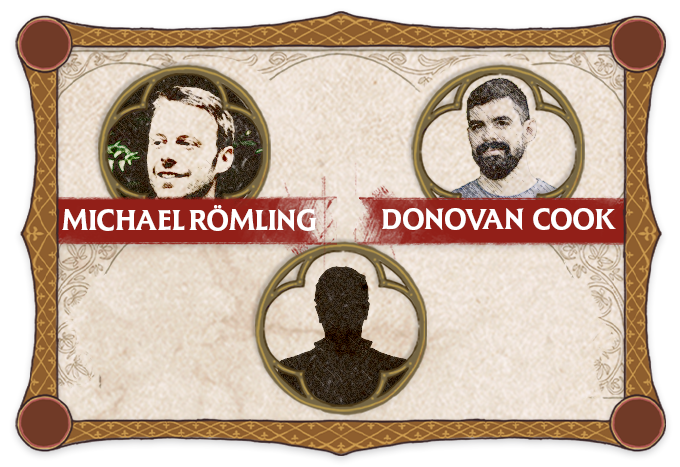
Donovan Cook: South African-born and English-raised, one of the fastest-rising voices in Viking fiction, with thirteen novels since his 2020 debut Son of Anger. The Ormstunga Saga, the Charlemagne's Cross series and The First Kingdom have won him a devoted following and praise from Matthew Harffy — "everything I look for in a tale of the Dark Ages" — and Peter Gibbons, who called his work "a shield-crunching epic."
Michael Römling: German historian and novelist whose Tankred saga of the Viking raids on the Frankish empire won the Goldener HOMER, Germany's foremost prize for historical fiction, in 2024, and took a HOMER audience prize the following year. He holds a doctorate in history, spent eight years in Rome — turning his own research on Spanish soldiers in sixteenth-century Italy into the novel Pandolfo — and has taught at the University of Göttingen since 2013. His fiction ranges from Varus's legions in Germania to Renaissance Milan, the Anabaptist kingdom of Münster and, next, Barbarossa's Cologne.